Camp Lavigne
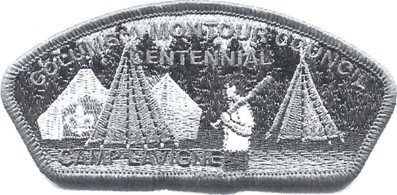
Historic Trail
Celebrating 100 Years of Adventure
1924-2024
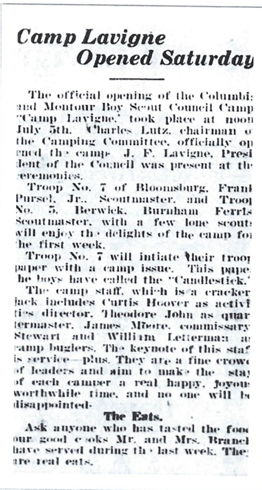
From the Bloomsburg Morning Press
Camp Lavigne Historic Trail
1924-2024
In 1923, the newly formed Columbia-Montour Council, B.S.A., leased a camp along Fishing Creek in Columbia County, PA, to provide adventure for the youth in its programs. This site, originally an Indian camping ground, was purchased just one year later from Mr. Elwood Knouse for $1,000, with Bloomsburg, Berwick, and Danville each contributing a third of the cost. The original property was 33 acres of woodland, with an additional 14 acres added soon after. The camp was named in honor of J.F. Lavigne, first council president. Official opening day was July 5, 1924. At present, Camp totals approximately 202.5 acres.
Prior to becoming a Boy Scout camp, this site was known as Winona Park, after the Indian maiden, Winona, who died and is buried here. During the 1800s and early 1900s the park was a favorite picnicking and camping ground. Many Indian artifacts have been found in the area, including a stone with the hoof of an Indian pony embedded in it, now on display in the State Museum in Harrisburg.
1. The Gateway
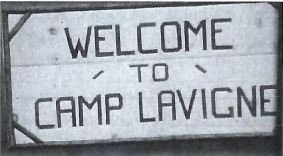
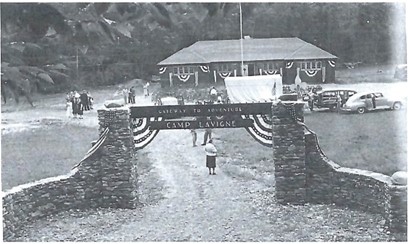
In the early years, a simple wooden sign, "Welcome to Camp Lavigne," stood at the entrance to camp . Then, in 1947, the present-day stone "Gateway to Adventure" was built. It was donated to Camp by Harry L. Magee. In 1992, the central beam was damaged by a state truck and needed to be replaced. The new beam had to be brought from the West Coast and the letters carved with a hand-held router.
2. The Bridges
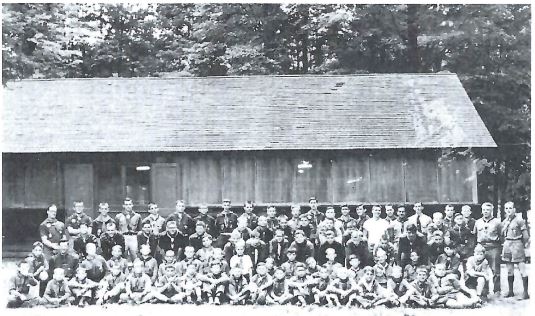
At first, Scouts used a boat to reach Camp Lavigne. The first bridge crossing Fishing Creek for the Scout Camp was the "swinging bridge," which was built in 1925. Unfortunately, on July 11, 1938, while a group picture was being arranged, this original bridge collapsed.
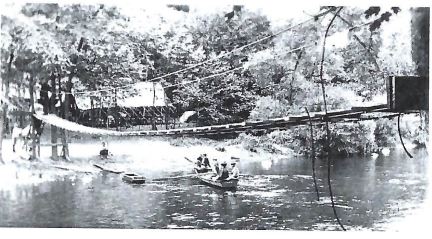 In 1939, a new steel and concrete bridge was built at a cost of $685.88, largely with donated labor and materials. If not for the many generous donations of time and materials, the cost would have been $2,088.45. Ralph Homan directed the project, and Harry Magee and James Law made generous contributions.
During the Hurricane Agnes flood in 1972, the bridge was threatened but held, though the smaller bridges to Greystone campsite were washed away and total flood damage to camp was estimated at $15,000. Camp Staff Week was underway when the '72 flood hit, as was Conservation Camp, with 54 Scouts in all. Most were evacuated to Explorer campsite, the highest spot, for three days during the flood, but they had plenty of food. Charlie Gregory remembers that some staff went canoeing on the flooded Parade Field. The stranded campers reportedly had a wonderful time.
Then, in July 2018, during a big storm, a tree came down on the bridge and bent the main steel beam. Thanks to a dedicated team of Camp Rangers and lots of community support, the bridge over Fishing Creek was rebuilt in time for the 2019 camping season. The main steel beam was removed and the original abutments strengthened.
The Council expected a price tag of $100,000, but generous donations of equipment, material, and talents lowered the cost to less than a
fifth of that. Special thanks go to Milton Steel, Don Bower Construction, engineer Denny Peters, and Merck, along with the team of Camp Rangers, who invested countless hours of their time.
3. The Dining Hall and Kitchen
The very first Dining Hall was under canvas-a 15' x 30' tent with wall to wall outdoor-outdoor carpet (grass and dirt) and with generous supplies of fresh air provided with each meal. This tent was situated to the left as you cross the bridge,in the former commissioner's area. Each table had its own individual chestnut cabinet for its plates and silverware. One of these cabinets can still be found in the Director's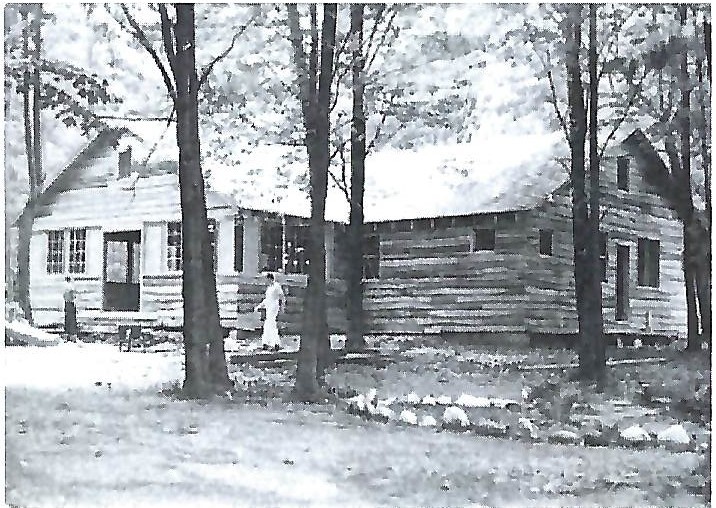 Cabin, formerly the Cook's Cabin. The first kitchen occupied the same site as the present dining hall.
In 1925, the first enclosed dining hall was built by the Benton Business Association. It was 30 feet wide by 40 feet long. The building burned down in 1939, and the present 30' x 60' Dining Hall was constructed, thanks to donations from the Erwine family. A close look inside will reveal many a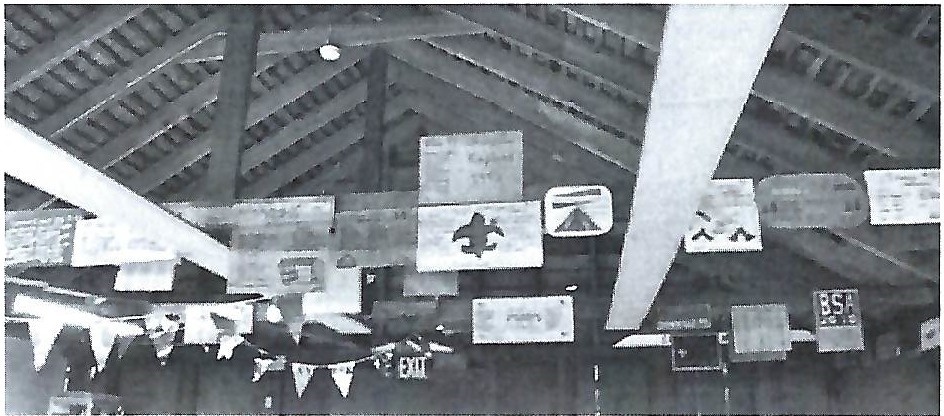 memento of summers at camp in the form of troop banners, signs, and wood carvings.
The Camp Director's Cabin, between Fishing Creek and the Dining Hall, was originally the Cook's Cabin. It was occupied for many years by Mom Piper, whose family ran the Pied Piper Inn at the junction of Rtes. 254 and 487 south of Benton. Staff in the late 1930s said she spoiled them terribly with homemade bread and sticky buns.
4. The OA Lodge
Wyona Lodge, #18, Order of the Arrow, was founded in 1925. Their first lodge was on the banks of Lake Harmon. That lodge burned in the late 1940s, and it wasn't until 1989 that they settled into another permanent 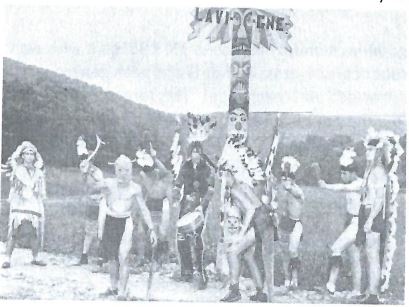 headquarters, in the camp pumphouse near the Dining Hall. Wyona Lodge is an active contributor to Camp Lavigne, both in providing labor and in funding projects around camp.
OA Indian Dancers, 1948
5. The Parade Field
The Parade Field sits at the heart of Camp. Flag ceremonies and pick up games of all sorts happen here. In the 1930s, it served as a baseball field. There was even a teepee village for a time. Many former campers will remember searching for the famous "Unless" stone in the field, a reminder of the Lorax's warning to protect the 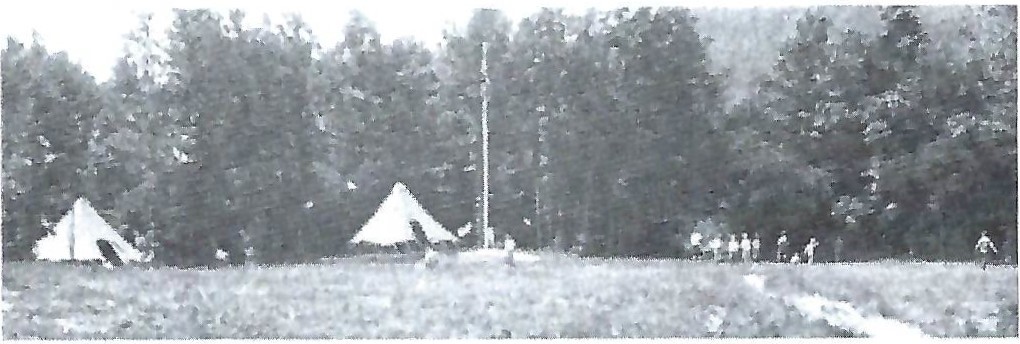 Earth. Sadly, it was displaced in one of the floods, but hopefully it will reappear one day.
In the early years of Camp Lavigne, the Scouts started a program of camp improvement that became an integral part of every day at Camp. The boys enjoyed the work and accomplished many tasks that
The Council would have been forced to hire help to do and might have cost them thousands of dollars. In clearing the Parade Field, the trees had been cut, the lumber taken out, and the branches cleared, but you can probably guess what was still left. That's right-the stumps! Camp leaders realized a little extra incentive would be needed to get a job of this proportion completed. So, they gave each stump a cash value-5 cents, 10 cents, maybe a quarter for a "whopper." The price tags provided the challenge and these early Scouts set to work. Keep in mind that Camp's original cost was only $5 a week.
In addition to stumps, the field was filled with rocks. So, early camp leaders set up a rope with #10 cans into which to throw the rocks. Accurate throws meant a free candy bar at the Trading Post.
6. The Flag Poles and Totem Poles
The present yardarm-style flagpole was erected in the 1980s by a Wood Badge Course held at Camp Lavigne.
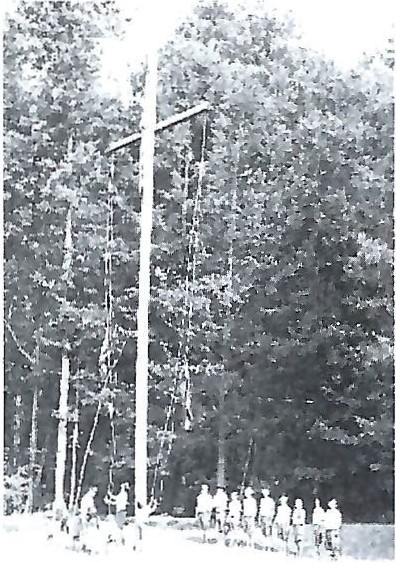 A series of totem poles have stood at the far end of the Parade Field over the years. In the 1970s, Troop 3 and Troop 88 both erected totem poles, one on each side of the flag. A later totem of chestnut was made right here at camp during a wood carving session. Then, in 1990, Tom Molter crafted a 28' pole. It was carved by hand with chisels at his home near Riverside and transported to camp. In the ground, it stood 20' high. At the top was an American condor, sacred to the Western Indians because it can soar forever. Between its legs was the National Crest, with two stars representing truth and knowledge. Below that, in order, were the face of an Indian, representing the spirit of Scouting; a pale face, representing the spirits of the unknown; a figure with bulging eyes, representing the legendary Johnny Martin; a ladybug, representing the Outdoor Code; a duck, representing the cheerful Scouter; and a totem, to scare away evil spirits from the Camp. Sadly, all of these poles are now gone, victims of old age.
7. The Swimming Pool
The original Camp Lavigne swimming hole was provided by Mother Nature herself in the form of Fishing Creek. Whether boys were 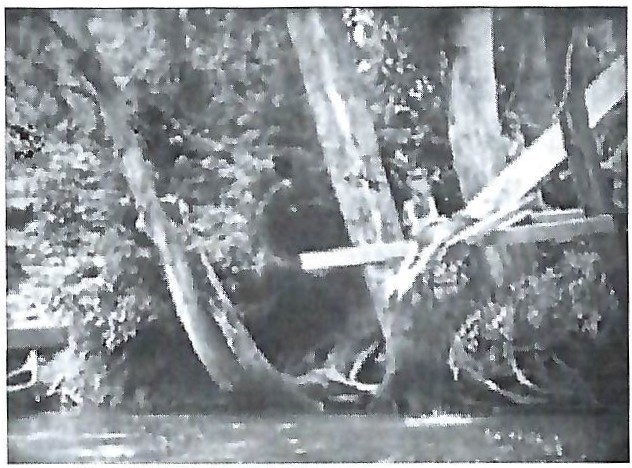 swimming in the creek or waiting along the tracks for their turn at the wooden slide into the creek, the train engineer on the Bloomsburg and Sullivan Railroad that came up along the bank would always lean on his whistle whenever he approached to warn the campers to get off the right-of-way.
Soon, everyone realized that a swimming pool was a necessity and so those in the Council and many outside its active organization got busy building one. The late Will Eyer, a Bloomsburg engineer with a great love for boys, did the engineering, and just about everyone who could, came up to help in every way possible so that on July 19, 1930, Camp Lavigne opened its brand-new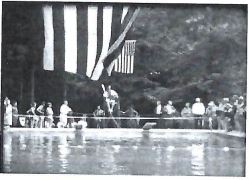 pool. This pool, in use until it was replaced in 1994, was 35 feet wide and 100 feet long and held 157,500 gallons of water. Total cost to the Council was $3,629.21.
With the pool came the "weekend ritual." Due to no chlorination system, the pool was emptied every Saturday and every Sunday afternoon the sides and bottom of the pool were scrubbed. Then the pool was refilled with "cool, refreshing" creek water with the pump donated by C. C. Housenick. The pump was on a Model A Ford Chassis and had a 4-inch line that would be able to pump 600 gallons of water per minute.
Over the years, many improvements were made-metal diving boards, a "shower bath," landscaping, new plumbing, and a solar collector to heat the pool. The solar collector, nicknamed "Carla," was
built by Carmen and Lamar Welliver, with materials donated by Kawneer. In 1994, the original pool was replaced by a slightly smaller one at a cost of $160,000, raised through the efforts of Elmer Robinson. Recent improvements include a modern shower house, funded by the OA, with individual shower stalls and ample bathroom facilities.
8. The Staff Area
In 1946, a cluster of staff cabins was built near the pool. These eventually fell into disrepair and were torn down in the late 1980s. Two new cabins were built on the same site in 2008, and present-day staff stay in those or in platform tents nearby.
In this general area also, in the 1930s, resided two retired Scouters each summer during camp. Pop Fornwald and Daddy Allison pitched their tents on the site of the present pump house. Daddy Allison taught nature, while Pop Fornwald set up a forge in the Round Top to teach the blacksmithing merit badge. Pop Fornwald is especially remembered for the eels he caught in Fishing Creek. Whenever the creek came up after a rain, he strung lines across the muddy water and caught eels 28-30 inches long, then cooked them in an outdoor oven . It was an honor to be invited to his delicious feast.
9. The Round Top
Round Top, as it is called now, was originally named "The Big Top." It was donated to Camp Lavigne by Mr. and Mrs. A. C. Leisenring of Berwick in 1936. The Round Top is an open-sided octagonal lodge 59 feet across. With its central fireplace and electricity, the Round Top has saved many an activity during inclement weather and has been home to hundreds of merit badge classes.
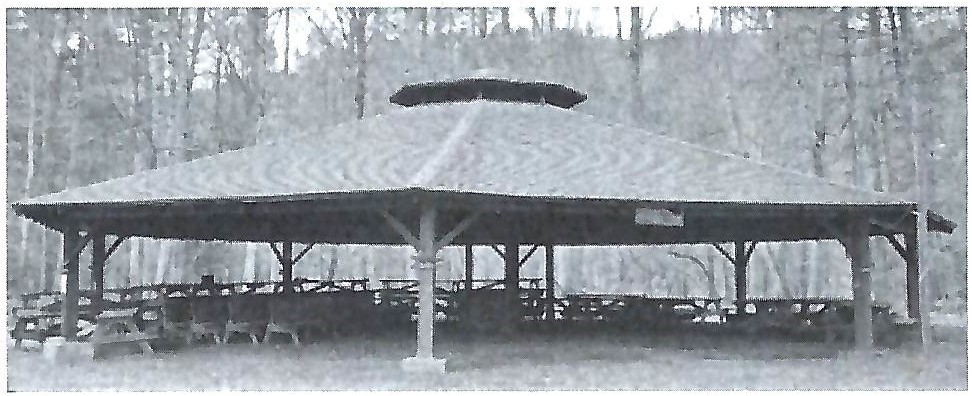
10. The Chapel
The Camp Lavigne Church Grounds were created as a place where God and Scout could be as one together. The chapel along Fishing Creek serves as a beautiful reminder that "A Scout is Reverent." The altar is constructed of creek stone and concrete. It was built in 1960. Benches and a portable organ were also obtained at that time.
Grant Piper, Scoutmaster of Troop 23, felt so strongly about Camp Lavigne and the Church Grounds that he and Lydia Edinger married there in 1940. Over the years, other couples, including Bob Spade and his bride, and Bob Broody and Kathleen Kelly, also chose Camp Lavigne for their wedding. These couples had a personal link to camp, and some had met here while visiting or serving on staff.
Now continue down the road, past Frontier campsite and the Scoutcraft area (at the former Pioneer campsite) to the far end of lake Harmon.
11. The Boat Pond
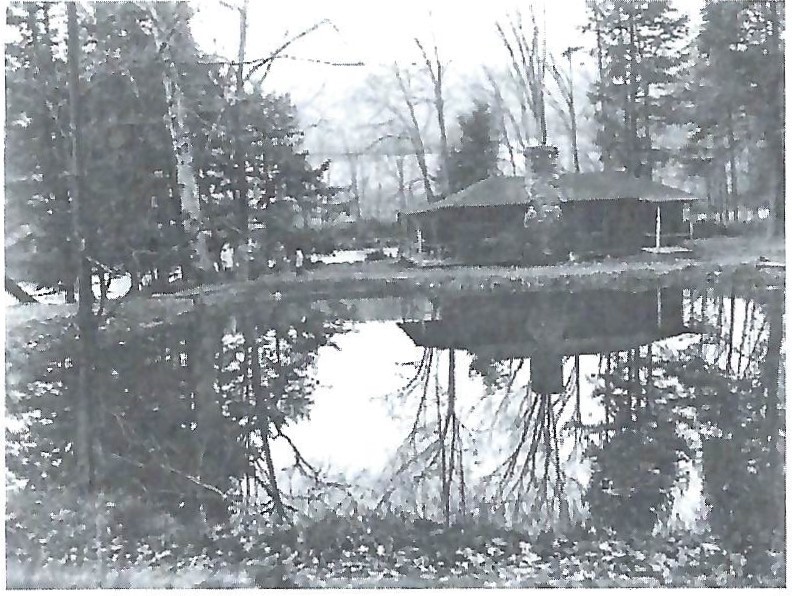 In 1927, a cabin was erected here at the far end of Lake Harmon for troops to use for winter campouts. This OA Cabin was a one and-a-half story building with a loft upstairs for sleeping. It had a large fireplace with a swinging arm for moving the kettle on and off the fire. The cabin burned down in the late 1940s. In 1982, the pond was re-done with the original spillway taken out and present dam breast put in. As
you walk around the end of the lake and up the railroad grade, you'll see the boat dock, built by Merck Cherokee Plant in 2006.
12. The Train Road
When Camp Lavigne opened in 1924, the Bloomsburg and Sullivan Railroad was still in operation and running through Camp. Campers in those first few years fondly remembered the train going by and blowing its whistle as it chugged up along Fishing Creek. In 1927, when the railroad was sold to the Reading Railroad, service through camp ended. The end of the line was now three miles south in Benton and limited to freight only. Today's Scouts still hike the train road through camp and out to the site of Johnny Martin's Cave and the rock-climbing area.
13. The Rifle Range
The original camp rifle range was constructed below Greystone campsite along the creek. It was moved in 1990 to its present location near Clay campsite. Materials and labor for the range were donated by Catawissa Lumber and Specialty Co.
14. The Campfire Amphitheater
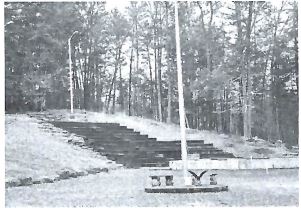 This new campfire circle was built along the train road near Clay campsite after the old Campfire Circle was damaged beyond repair by the flood of 2011. It was completed in 2014, largely through the effort of Kent Robbins, who invested 720 hours in the project. The amphitheater seats 350 and features a raised 20' x 36' stage. Future plans include a stage roof, lighting, and a concession stand. The flagpole, donated by Espy Fire Co. and Ladies' Auxiliary, came to camp by way of Central Columbia High School, where it once stood.
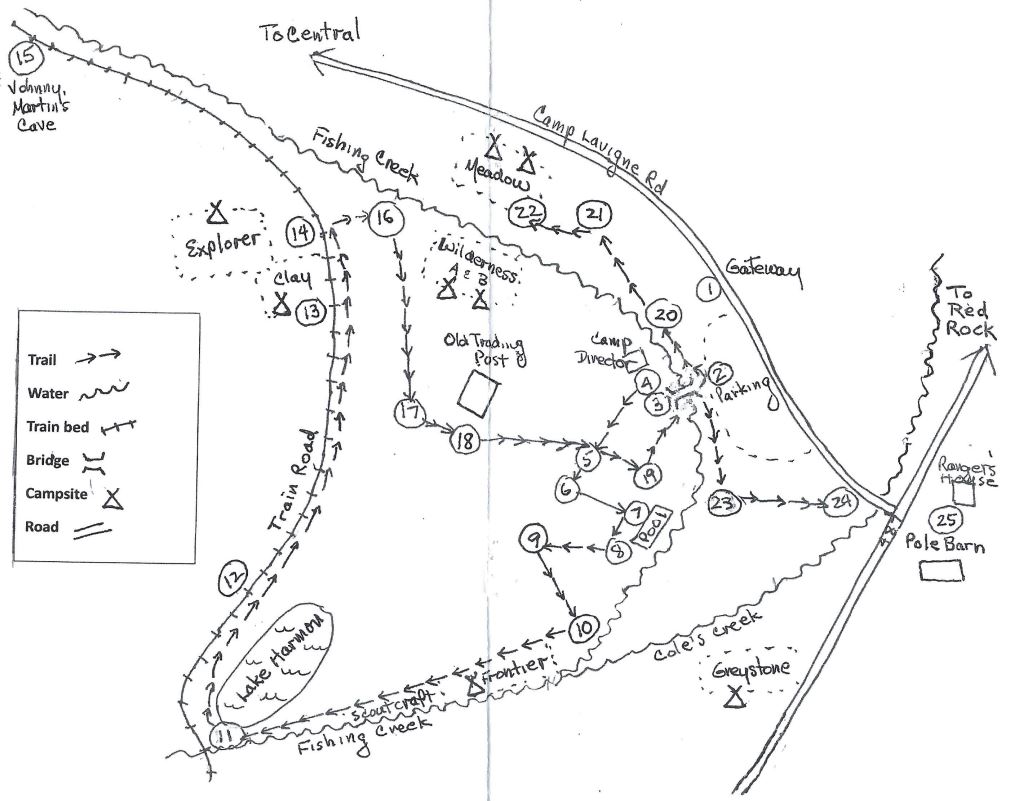
At this point you can continue around the main loop to #16 or you can choose to walk the railroad bed along Fishing Creek to the site of Johnny Martin's Cave. (1/2-mile round trip).
15. Johnny Martin's Cave
A longstanding Camp Lavigne tradition is for campers to walk out along the railroad bed, especially after dark, to watch out for Johnny Martin and his cave.
"Warning." "Beware! Oh strangers on this trail. Johnny's a watchin'; 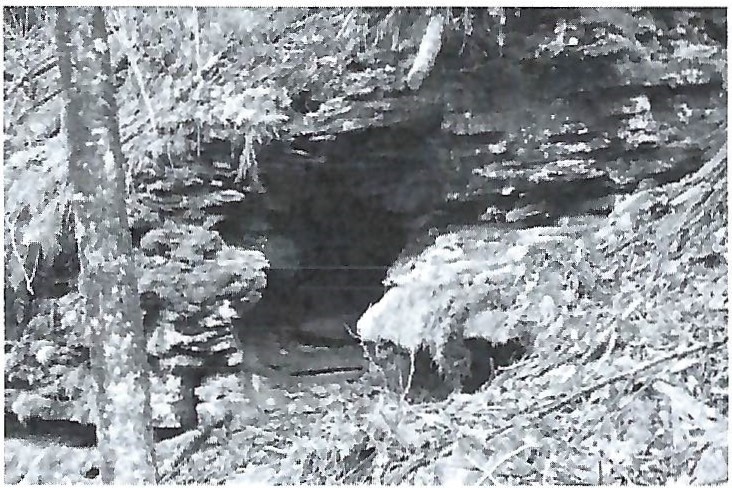 hear his wail.
"According to the camp legend, a man named Johnny Martin lived in a cave in the cliff. Some say he was badly wounded in World War I and went into hiding here. Others say he was injured or killed when he fell off a train while jumping from car to car, hit his head, and was knocked into a wild state. Interestingly, a soldier by the same name was killed in Europe during World War II. His plaque is among those in Memorial Lodge. It is a mystery how John Martin's plaque is always shiny while the others have dulled through the years.
16. The Wilderness Campground
The first housing at Camp Lavigne was in tents around the Parade Field. These were National-Guard-style tents rented from the State. Early campers engaged in lots of competitions, such as first aid and knot tying and cowboy-and-Indian hunts. 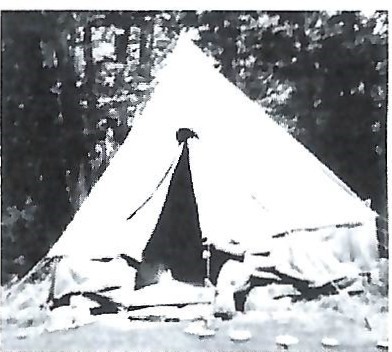 One patrol from Berwick Troop 5 went on to represent the Council in 1926 at the Sesquicentennial competition in Philadelphia.
The first established campsite was Wilderness. Scouts camped there, used the swimming hole, and had their Courts of Honor. In the early years, a staff person resided in the site with the troops, in a two-man cabin
that stood on the upper level. Similar cabins were built at Explorer, Clay, and Harmon, but only the Clay cabin remains today. If you look carefully down over the creek bank in Wilderness, you should see a square block of concrete with a rusted-off pipe in the center that was the well for the original Wilderness Campsite.
After Wilderness came Pioneer and, later Explorer. Then, following World War II, Harmon, Clay, and Welliver were added, named after camp staff killed in the war. Finally came Greystone, Meadow, and Frontier. Original tent floors in many of the sites throughout camp were constructed by the Millville Business Men. Camp Welliver later became
the Provisional Camp and, in 1990, the Rifle Range.
Storms in 2011 caused much damage to Camp, leading to a burst of construction, repair, and rearrangement of sites. First came a violent windstorm in July 2011 that felled hundreds of trees and forced a middle-of-the-night evacuation of Lake Harmon for troops to use for winter campouts. This OA Cabin was a one and-a-half story building with a loft upstairs for sleeping. It had a large fireplace with a swinging arm for moving the kettle on and off the fire. The cabin burned down in the late 1940s. In 1982, the pond was re-done with the original spillway taken out and present dam breast put in. As from tents to the Dining Hall during a Wood Badge Weekend.
Afterward, workers cut and stacked piles of felled lumber, only to have most of it washed away in the September high waters caused by Hurricane Lee. Harmon campsite was demolished and closed.
Pioneer campsite, which had always been the first to flood, hung on until 2021, when it was decided to move Scoutcraft classes for First Year Campers there and close the area to overnight camping. To restore the lost bunk space, Clay campsite was expanded and Explorer divided into two sites, A & B. Across Fishing Creek, Meadow A&B campsites were moved back from creekside to the open meadow, out of the flood plain. Many sites now offer campers a choice between shelters and tent platforms.
17. New Nature Lodge/ Old Campfire Circle
The Nature Area has moved from place to place over the years. This new permanent Nature Lodge building sits on a slight hill behind the former stage of the Old Campfire Circle. Named the Dennehy Ecology Conservation Center, it was a gift of the Dennehy Family in memory of John Dennehy, M.D.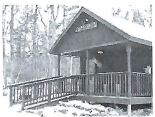
The Old Campfire Circle was established on this site early in the camp's history. In 1995, this Campfire Circle was refurbished by the Order of the Arrow, but in 2011 the flood damage wiped out these improvements and the site was abandoned in favor of a new amphitheater on higher ground near Clay campsite.
 Every Friday evening during camping season, hundreds of parents and friends would gather at this location for the Camp Ceremonial Council Fire, where they were entertained by troop skits and watched Scouts being recognized for their achievements during the past week. Ceremonies were often very dramatic, such as one remembered by Art Wark in which fire came down out of the heavens to light the campfire, to the amazement of all. To announce each campfire, kerosene torches were lit in the stone portals at the entrance to the old path, just to the right of the Round Top.
18. The Treehouse
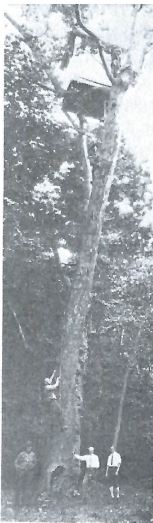
In 1928, in a huge buttonwood tree that stood at the entrance to the trail to the Campfire Circle, a treehouse was constructed under the leadership of D. S. Hartline. Built in a natural crotch of the tree about 50 feet above the ground, the platform was six feet by six feet . A rope ladder, swinging freely from the tree, was
the sole method used to enter the Treehouse through its "trap door." The Treehouse accommodated four Scouts at a time. Practically every night of camp for a period of two summer seasons, the Treehouse was occupied. Scouts upon entering Camp would register for the privilege of "sleeping out" in the Tree house. The big attraction of the
Treehouse was that, in addition to its being something different, the wind would make it "roll" a little at night. This added element of danger only enhanced its "magic." The Treehouse was torn down in 1931 when it started to become a real danger.
You are back at the Parade Field. Cross the field toward the swimming pool. To the left, you will see the new Trading Post.
19. The Trading Post
At first, the Camp Trading Post was set up in a corner of the Dining Hall until a separate building could be built at the edge of the Parade Field near the path to the Campfire Circle. For decades, Scouts lined up to spend their extra change on candy and other fun stuff. Flooding in 2011 led to a decision to abandon the old Trading Post and move the old nature lodge to this location near the swimming pool, to serve as the new Trading Post. Former campers will be relieved to know it still dispenses the ever-popular blue birch beer on those hot summer afternoons.
The rest of the trail is across Fishing Creek. Cross the bridge now and turn left to walk along the creek to your next stop.
20. Wise Memorial Lodge
In 1945, a campaign was launched to erect a Lodge "Memorial Cabin," as it was first called, at Camp Lavigne in honor of those Scouts and Scouters who served in World War II. Forty-nine individual plaques honoring those who were killed in action are mounted on the wall of Memorial Lodge. A site across from the other camp buildings and along the creek was chosen. Money for the building was donated by the Wise Potato Chip Co. of Berwick. The Lodge was dedicated in 1948 as part of the Council's Silver Jubilee Birthday Party and then rededicated in 1967, when an addition was constructed.
It has been further renovated in recent years, closing in the large porch for additional space and modernizing and enlarging the bathrooms. The flagpole in front of the Lodge was given by VFW Post 84 in Bloomsburg to honor veteran and Scoutmaster Earl Weaver.
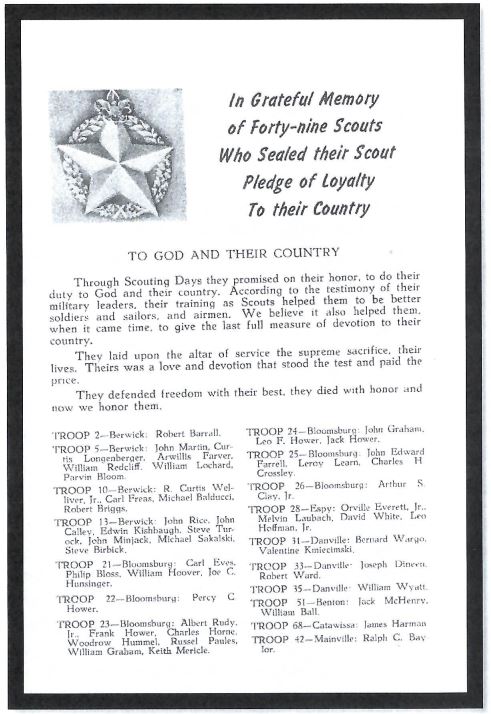
Today, Memorial Lodge serves as the central headquarters for the Camp. It is also the first aid station. The summer of 1948 saw a major public health emergency at Camp Lavigne when Cledith Harvey, a Scout from Troop 10 in Berwick, who was in camp the week of July 25-31, was reported stricken with polio, causing the entire camp to be closed. All 103 boys, leaders, and staff in camp at that time were placed on a 14-day observation quarantine.
21. Fort Wuliton and Wolfe Climbing Tower
In 1994-95, a two-level, 38-foot-square stockade was built in the meadow, largely with volunteer labor. Materials were donated by the Catawissa Lumber and Specialty Co. Its name, Fort Wuliton, means, in the language of the Delaware Indians, "To make well, to do well."
A few years later, in 2001, a C.O.P.E. climbing program, under the leadership of Larry Wolfe was just getting started. Scouts started out rappelling the rock sides along the railroad bed, but the sides weren't steep enough, so, in 2002, they created the "Triclops" out of three trees, with climbing ropes and a rappelling line. Soon they were climbing on the fort, but a real tower was needed. In 2005, a climbing tower was erected in the vicinity of the Fort, and the fort was then
taken down. Its two corner towers were later repurposed to serve as the checkpoints at the entrance to the new bridge.
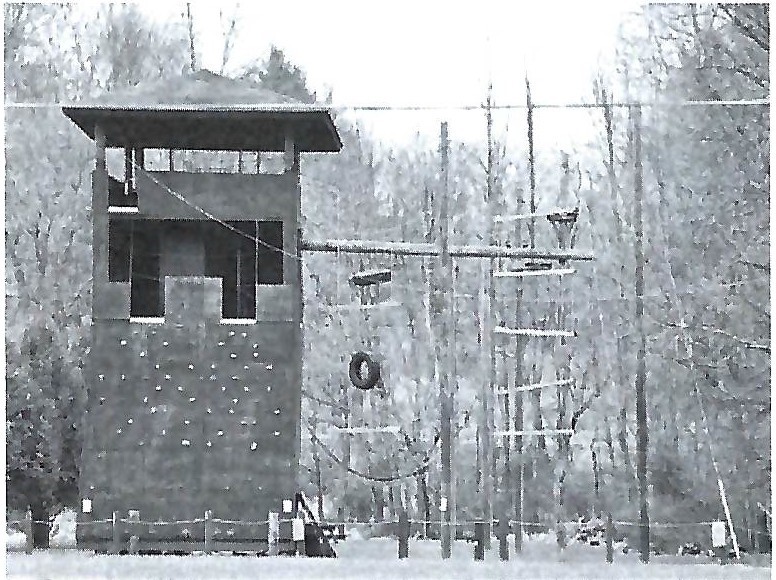 The C.O.P.E. and climbing program continued to grow. A high ropes course and zipline were added to the tower in 2008. A low-ropes C.O.P.E. challenge course was also created nearby. One year the national inspectors named Camp Lavigne's climbing facility the "Best Program on the East Coast," according to Larry Wolfe. The tower has been named in his honor for all his efforts.
22. Shelters in the Meadow
Much of the new building activity of the past 30 years has occurred in the Meadow, which lies between the creek and the road, past Memorial Lodge. First came the Program Shelter, completed in 1994, which features removable sides and a stove for winter camping.
Much of its construction was done with help from a JTPA crew. Next came the Scouters' Memorial Pavilion, a large under-roof facility filled with picnic tables. It was constructed by Troop 39 on the concrete foundation of the former fort. And finally, with the moving of Meadow campsite to higher ground, came three modern sleeping shelters, each with bunks, a changing area, and a porch.
Now return to the bridge and follow the creek downstream to the Cole's Creek area.
23. Cole's Mill Site
In the nineteenth century, a small settlement stood here, with a mill operated by the Cole family as the central structure. The first grist mill in northern Columbia County, it was built by Ezekiel Cole around 1800 on the creek that bears his name, Cole's Creek. Generations of the Cole family-Ezekiel, Ezekiel Jr., Alinas, Albert-owned and operated it until 1917. It produced buckwheat flour, cornmeal and chops and was reported never to have run out of water in the years of its operation. The present wetlands were the mill pond. 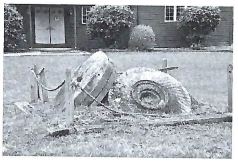 If you explore this location, you will find remains of the mil race and some of the stone foundation. The four millstones, used for grinding the grain, now rest outside Memorial Lodge. These huge stones are circular and banded in metal.
The small settlement on this site was originally known as Sugarloaf, then Cole Town or Cole's Creek. It had its own post office, and members of the Cole family served as postmaster until local delivery was discontinued.
24. Greystone Lodge Site
The building that stood here was the Ezekiel Cole homestead. In 1864, it served as the headquarters of the Union officers who marched to Benton in search of the Fishing Creek Confederacy (made up of reputed Civil War draft dodgers). The controversial actions of these troops resulted in the arrest of some 40 residents of northern Columbia County and much harassment of the local citizens. The building fell into disrepair and was torn down in the 1980s. If you explore the area, you might locate the filled-in well and the septic system for the building. Beyond the site, up Cole's Creek, is Greystone campsite.
25. Ranger's House and Maintenance Shed
At the junction of Route 487 and Camp Lavigne Road is a house and 28 acres purchased by Camp Lavigne in 1967. This Ranger's House, refurbished in 2006 by Dr. John DeFinnis, is once again in need of renovation. It has been unoccupied since 2016.
The Pole Barn Maintenance Building nearby serves as the headquarters for the Camp Rangers, led by Kent Robbins. It includes a large, heated workshop area, storage space for the tractors, mowers, and other equipment, and an upstairs sleeping area. Money to build the maintenance building came from a gas well on the camp property, and Kent Robbins scavenged building materials from all over to complete the project. In 2015 he set up an official Friends of Camp Lavigne ranger program. Camp Rangers commit to giving 75 hours of volunteer labor a year. Kent Robbins, Danny Gaugler, Ed Dilg and Dale Neiderhiser serve as officers for the group.
The Camp Lavigne Song
O we're the boys from Camp Lavigne
you hear so much about.
The people always shout at us
as we go marching out.
We're noted for our wisdom
and the clever things we do.
Most everybody likes us
and we hope you like us too.
As we go marching, and the band begins to P-L-A-Y
You can hear us shouting, "The boys from Camp Lavigne
are on their way." HEY!
This Historic Trail was published in 2024 by the Columbia-Montour Council, B.S.A. in commemoration of the 100th Anniversary of Camp Lavigne
Written by Mary Bernath
With help from Charlie Gregory, Dan Gaugler, Larry Wolfe, Kent Robbins, Mike Dennehy, Mike Benjamin, and Paul Knox
